
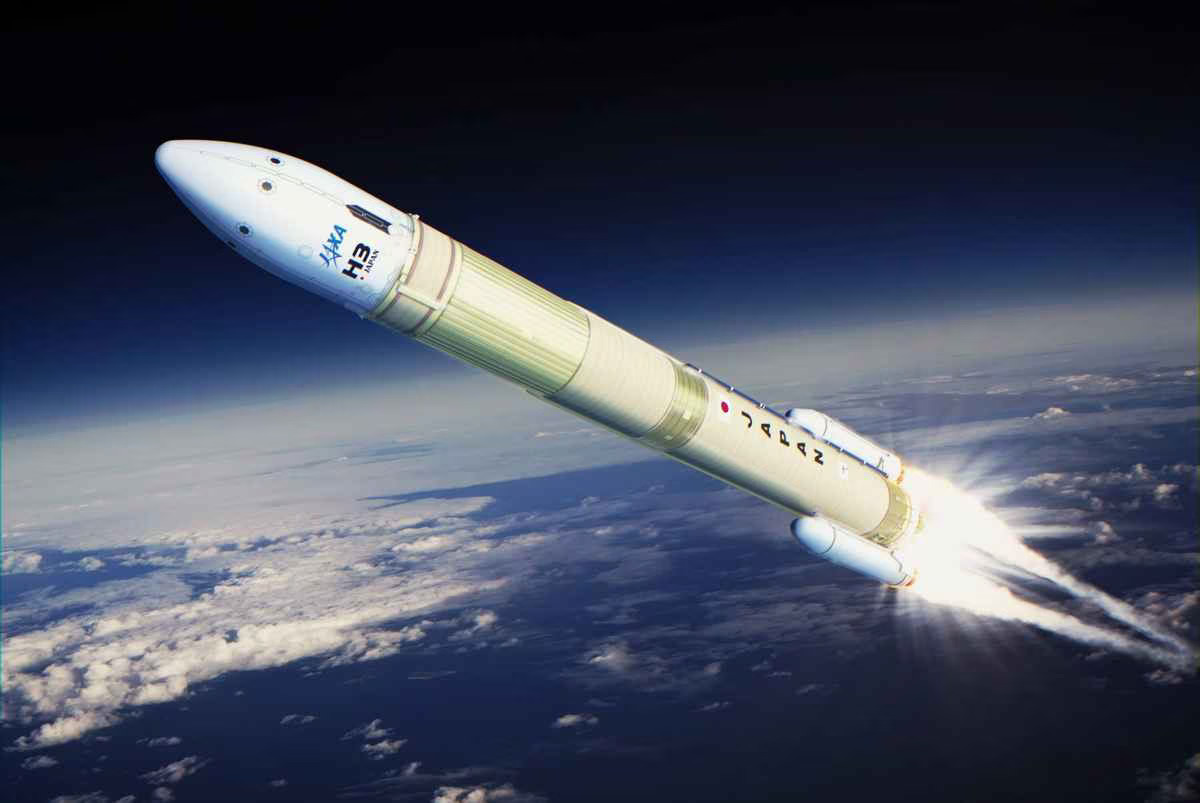
Japan`s next-generation H3 rocket successfully returned to service on Friday, delivering a major boost to the country`s space ambitions and showcasing a new lower-cost model designed to compete in the global launch market.
The rocket lifted off from the Tanegashima Space Center and completed its mission as planned, with the Japan Aerospace Exploration Agency (JAXA) confirming that the vehicle reached its intended orbit.
JAXA also reported that six small satellites developed by universities and research organizations were successfully released into space during the mission.
The launch marked the debut of the H3`s "30 configuration," a simplified and more affordable version of the rocket. Powered by three LE-9 liquid-fuel engines and operating without solid rocket boosters, the model has been developed to reduce launch costs and attract a wider range of commercial customers.
Friday`s mission represented the sixth successful flight of the H3 programme and helped restore confidence in Japan`s flagship launch vehicle following earlier setbacks.
The H3 was introduced as the successor to the highly successful H-2A rocket and forms a key part of Japan`s strategy to strengthen its position in the rapidly evolving global space industry.
Japan sees a dependable launch system as essential not only for commercial opportunities but also for scientific research, satellite deployment and national security needs.
The programme faced a major challenge during its maiden flight in 2023 when the rocket`s second-stage engine failed to ignite. Another mission suffered a similar problem later, preventing a navigation satellite from reaching its designated orbit.
Following those incidents, the H3 remained grounded while engineers investigated and addressed the technical issues.
The successful return to flight comes at an important time for Japan`s space programme, which includes plans for future deep-space exploration projects, including a Mars mission targeted for 2028.
JAXA and co-developer Mitsubishi Heavy Industries are aiming to gradually increase the H3 launch rate to between six and eight missions annually as they seek a larger share of the international launch market.
The latest success is expected to strengthen confidence in Japan`s space capabilities and support efforts to establish the H3 as a reliable and cost-effective alternative in an industry increasingly dominated by private launch providers.












-20260904064352.webp)















-20260828120358.webp)